

JK Rowling hated a woman who used twee little bows in her hair, and she used that character trait in one of her villains. This got me thinking about what ‘villainous’ traits I know in real life and how I can borrow from them to create complex and interesting villains on the page. This is a brain dump for me to refer back to later.
Villains in text
In comic books villains can be the opposite of the protagonist, brought to light in the movie Unbreakable, against the villain Mr Glass. Their powers are direct opposites of each other.
Then there are villains who are similar to the hero except on key principles, for instance Magneto and Professor X. Magneto is a strong villain because he’s sympathetic – he had a traumatic childhood and he has good reasons to act the way he does. He’s also not always wrong, which causes interesting tension.
Trauma is often used as a reason for villainous behaviour. Sexual assault was the ‘go to’ reason for female violence for decades. It’s become a stereotype that oversimplifies women, and it’s a bit dull.
But there are plenty of villainous traits or characters I’ve seen in real life I can borrow from.
Politics
Politics sets the binaries up for you – problematic in politics, useful in narrative. Each side thinks their beliefs serve the greater good, and that the world will be better off if they ‘win’. Each side hunkers down further into their position so the conflict can never be resolved.
Class
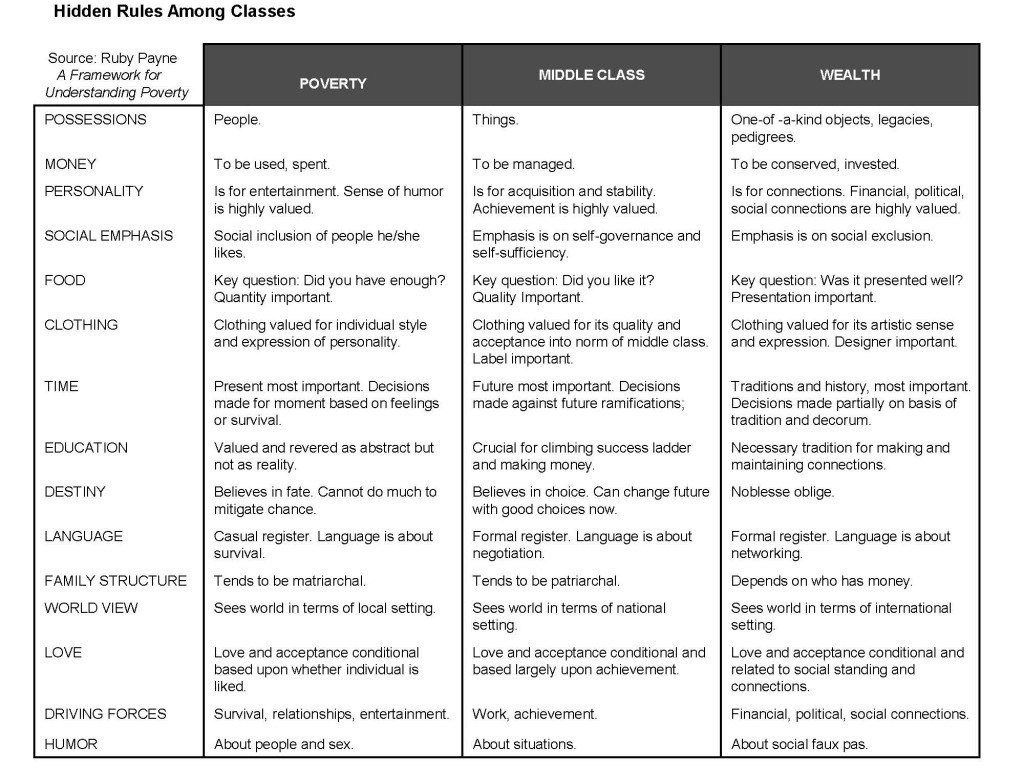
Class is a great reason for villainous behaviour, because people from different classes are usually not served by the same solutions. Class is used a lot – JK Rowling uses it with Dobby and the House Elves – the downtrodden are sympathetic characters, the powerful are automatically villainous, but don’t consider themselves to be. I found the table below to outline some of the ideological differences between classes that can cause conflict.
In real life people from wealthy backgrounds often live in a bubble with different rules to poorer people. Real life differences I’ve heard of/ have seen:
- Wealthy people taking home things from a private hospital ‘because they liked it’, not realising that you’re not allowed to do that.
- People who grow up wealthy have more pressure to succeed – almost to the point of trauma as they may feel their familial love is dependent on it
- Wealthy people are more private about social transgressions like teen pregnancy, domestic abuse etc, because their reputations are on the line.
- Wealthy people select gifts carefully, poor people place less value on them
Race
Race is a good point of conflict, because it comes with an inbuilt power imbalance and cultural difference that’s difficult to overcome. Some cultural differences could be:
- Level of emotional expression (Think Spock, but also Chinese and English). This also affects reaction to stress – yelling arguments vs quiet disasgreements
- Level of physical affection
- Rule followers/ rebels – Germans stop at traffic lights even when there are no cars. Dominant races have more freedom to break the rules.
- Stereotypes which shape the world’s behaviour to the character – being watched in supermarkets in case of stealing, assumption of poverty
- Motivation – being a minority of any kind means being aware of disempowerment and attempting to overcome it. It’s a constant awareness people in power don’t have to consider.
- Assimilation/ torn between cultures – migrants are often torn between worlds, and have a choice about where they align.
Trauma
The people I know in real life with the worst behaviour and the most frequent conflicts usually have traumatic backgrounds. Trauma can sometimes cause more complex damage than anxiety or depression. Deep trauma (particularly childhood trauma) can fracture a personality badly and develop a life motivated by a subconscious need to ‘feel safe’, in whatever way that looks like to them. They can:
- Be charming and popular to create a ‘tribe’ of people. But they can find it hard to maintain stable relationships.
- Be emotionally removed. This can come across as sounding ‘false’, or saying the wrong thing. They can upset people easily unwittingly.
- Be emotionally uncontrolled or find it hard to emotionally regulate in a healthy way – get angry easily, cry easily, make other people cry, lash out when angry.
- Have triggers, usually when they’re feeling at threat. Usually when people act chaotically it’s not chaotic at all – they have a consistent trigger or set of triggers that are the key to understanding their behaviour.
- Often have conflicts, and behave in strange, unexpected ways during those conflicts due to their triggers
- Not know how to repair conflicts. In order to feel safe, they can separate people into the ‘in’ and ‘out’ groups. Repairing conflicts means being vulnerable with someone who’s already in the ‘out’ group which is much scarier.
- Lie – but believe their own lies. The desire to stay safe is subconscious, and that can mean developing whatever perspective of the world supports a ‘safe’ and unthreatened environment.
- Sow discord between ‘in’ and ‘out’ groups to strengthen their protected environment. This could be between close friends and people they’ve fallen out with, or…
- In close relationships, seek to control someone, or distance someone partner from their friends. It’s about control, and securing their safe place (or safe person)
- Be in distress or vulnerable when it suits them. Being pitied is a safe place to be sometimes – it’s an easy way to connect with people. At other times being seen as vulnerable can be a negative – people can be stifling when trying to be protective, and distressed people are rarely respected.
- Seek control and power. There’s safety there. That power might be political or social, or it might just be power over ‘the narrative’ – how they come across and what people are staying about them.
It’s tempting to see these fractured personalities as manipulative, but the motivation and understanding of their own triggers is rarely conscious. Their behaviour can be seen as chaotic, but it’s often predictable when you understand their embedded need to feel safe, and their triggers and trigger responses.
I lean towards fractured personalities for my villains. If you throw in another trait like a class, race or political aspect, you’re looking at a complex character who’ll stir up crazy drama.
Villain motivations
I’m going to end on motivations because it’s something useful for every character, and often in real life. Therapist boyfriend says people are motivated by four things:
- To make a connection
- To avoid something
- To gain something
- To emotionally regulate
The most interesting and least understood of these motivations is emotional regulation. People shop, eat, cry, laugh, cut themselves or go running… but villains could kill, steal, scream at people, burn buildings to the ground. And then be sorry about it.

 Lisa Rodrigues
Leave a comment